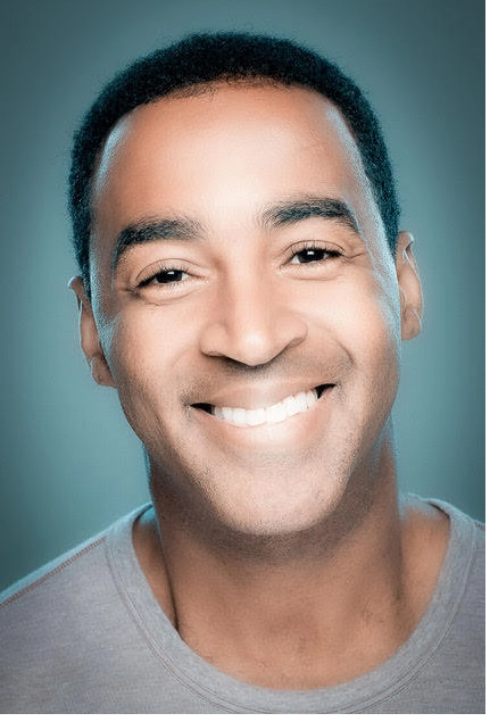
The Stages of Your Photo Session
What’s my photo shoot going to be like? Do I need to prepare to be photographed? What happens first? What happens next, and what happens after that? I’m nervous — does everyone get nervous? How do I get past it? Can you guarantee I’ll relax? How long will the session run? When do I get my images? These are questions that actors who book sessions with me tend to have in their heads but often don’t ask. I thought it might be useful to address them (and others) by describing the stages of your session, in sequence… Before the session The first step is a phone conversation, which allows me to get to know you a bit, learn what you’d like to have come out of your session, and fill you in on the broad strokes of the stages listed below. During the session First off: I guarantee you’ll relax. If you’re experiencing apprehension, it’ll be gone soon after we get started. On the day of your shoot you’ll find a space to park at the Brewery Arts Complex (parking is free) and call us. One of the team will come out to help you bring in your wardrobe, which we’ll hang up on clothes racks in the makeup room. (We have a steamer.) After a quick tour of the studio – which will already be lit — you’ll get made up. Typically this takes 30 minutes. (Your makeup artist will be on set for the duration of the shoot, keeping an eye on you as we shoot – an invaluable function.) The session begins, generally, with a basic headshot setup. A change of wardrobe, and perhaps changes to the lighting, and more headshots. Another wardrobe change and a change in approach: a new setup and new lighting to capture mid-length shots and other views. We’ll also do some improvising at this point, if you’re so inclined. I’ll suggest emotions and states of mind for you to express. This is play time, which can yield great images. Another wardrobe change and new staging, as we make use of the some of the actual studio environment, adding variety to the shoot. Throughout your session, we’ll pause to upload images to the studio computer and briefly review them so you can see in real time what’s being captured There’s no predetermined time limit to the session. The end always arrives organically. We’ll both know when we’ve gotten what we need. Post-Production (Editing the shoot) Your session is uploaded to Adobe Lightroom on my office computer. All images are reviewed; the rejects – there are always rejects — are marked and discarded. (A “reject” is not necessarily a failed image but likely is not a “select”.) All remaining images are “developed” — adjusted for exposure, color balance and presence. A second review is made to identify and eliminate other rejects. A second round of adjustments is applied to the remaining set of images. The select set is renamed (numbered and personalized with your name) and sent to you for review. After you’ve looked at everything, we’ll have a phone conversation to identify the “hero” images – the best of the best. Additional refinements are made to the hero set, which is sent to you. The whole process – the shoot, pre-production and final delivery of images – usually takes 4-5 days, as my schedule allows. Retouching Typically a professional retoucher’s services aren’t needed; I’ll have been able to make cosmetic adjustments to your select set, and will add more, probably, to the hero set. If advanced work is needed (on one or more images) the images will go to my retoucher, whose current rate is $60 an hour. I’ll pay his fee directly, and you’ll reimburse me for that amount. After the fact You’ll be able to talk to me anytime you like.
Frame by Frame
Prior to becoming a headshot and PR session specialist in Los Angeles, I’d already had two careers in photography. The first was as a photojournalist, shooting assignments for magazines, design firms, corporations and the entertainment industry, with several years as the photographer for Jane Fonda’s exercise video covers and publicity sessions. Notable People I’ve Photographed as a Photojournalist During this time I photographed many people, among them… Kim Alexis Steve Allen Gloria Allred Maria Conchita Alonso Julie Andrews Anne Archer Sir Richard Attenborough Lynda Barry Ed Begley, Jr. Karen Black Steven Bochco Sonny Bono Powers Boothe Beau Bridges Jeff Bridges Eli Broad James Brolin Jim Brown William S. Burroughs James Cameron Kirk Cameron Roger Corman Ted Danson Richard Diebenkorn Bruce Dern Michael Douglas Anthony Edwards Linda Evans Sally Field Carrie Fisher Rep. Tom Foley Jane Fonda Harrison Ford Michael J. Fox Larry Gelbart Frank Gehry Laura Dern Jeff Goldblum Merv Griffin Matt Groening Darryl Hannah Tess Harper Phil Hartman Lili Haydn Tobe Hooper Sir Anthony Hopkins John Hughes The Hughes Brothers Kareem Abdul-Jabbar Philip Johnson Bruce Jenner Diane Ladd David Lander Linda Lavin Norman Lear Jack Lemmon Tea Leoni Patti LuPone Shirley MacLaine Taj Mahal The Manhattan Transfer Penny Marshall Jayne Meadows Alyssa Milano Henry Miller Joe Montana Ed Moses Ornella Muti Louise Nevelson Laraine Newman Nick Nolte Justice Sandra Day O’Connor Ryan O’Neal Dolly Parton Edi Patterson Cassandra Peterson Jeremy Piven Stefanie Powers Gilda Radner Lynn Redgrave Molly Ringwald Julia Roberts Kenny Rogers Norton Simon Steven Spielberg Mindy Sterling James Stewart Julia Sweeney Cheryl Tiegs Grant Tinker Liv Ullman Billy Vera Ben Vereen Irving Wallace Lew Wasserman John Wayne Forest Whitaker Cindy Williams John Williams Carl Wilson Jane Withers Beatrice Wood Brig. Gen. Chuck Yeager From Photojournalism to Stock Photography My second photographic career was as a producer of commercial stock photography, supplying New York-based photo agencies with images for licensing worldwide. Stock images are category-driven for the marketplace — ad agencies, corporations, publishers and others – to be used to promote or illustrate whatever’s being sold. I chose lifestyle (people) as my category. I hired models and actors to portray couples, families, businesspeople, exercisers, doctors and patients, teachers and kids in classrooms, and so on. At that time I had a 4400 square foot studio in Hollywood and a team of experienced freelance assistants, wardrobe stylists and makeup artists. For stock production we built a succession of large three-walled sets, designed to be self-lighting. Strobe heads were attached to set’s outer walls, aimed away from the set, towards the white walls of the studio’s cyclorama. When the strobes fired, light bounced from the cyc walls through the set’s windows, creating the illusion of soft, diffuse daylight across the entire area. We never had to add light — only reflectors for balance, sometimes, as we changed setups. Beautiful daylight 24 hours a day! We also shot on location – homes, offices, hotel suites, parks and wilderness areas. At one point I rented the Warner Brothers Ranch for a two-day shoot, with 20 models and a six-person crew. Over fifteen years I produced 600 shoots, using 1500 of the best actors and models. I could find – talented people who brought realism to the scenarios we shot. Assignment work had given me years of experience and the chance to interact with people from all walks of life – actors, architects, artists, athletes, authors, composers, directors, musicians, politicians, producers. I learned that being assigned to photograph prominent people for publication didn’t necessarily tell me what to expect from the encounters. Most subjects were relaxed; others weren’t. Most were personable and even joyful to be around. But some were ill at ease. Often this had to do with discomfort at being photographed, or having been photographed too often, or issues in their own lives at the present moment. Such encounters could be challenging, but my job was to produce pictures with impact, no matter the situation. I had to learn how to navigate these waters, and for the most part, I did. The assignment years were the bedrock for my stock production phase, but still there was more to learn. As a stock shooter, my tool kit expanded. How My Experience Shapes My Headshot Photography The kind of assignment shooting I’d done most often is called environmental portraiture – people photographed at home or at work, or in other settings. As a stock photographer, I needed to create environments. I’d built sets before, but now set design was up to me. Also, I needed to learn to be a more pro-active director, as stock shooting involved photographing models interacting in generic roles: couples, families, businesspeople in office settings, doctors and patients, teachers and kids, and so forth. I had to tell these people what to do and how to relate to one another — silently! (People shouldn’t be photographed talking; it doesn’t work.) How do my two prior photographic careers inform my activity as a headshot and PR session shooter? Good question. (I’m glad I asked it.) Here’s the answer: everything I’ve learned about picture-taking along the way — frame by frame — is in play during each and every headshot and publicity session. And I’m still learning.
Cameras I’ve Loved!
I’ve been taking pictures since I was a child, starting out with cameras that looked this… I’m serious! My first cameras had been manufactured long before I was born. Vintage Cameras Found in a Closet! I found several in a closet in our family’s home in Manhattan. I’m guessing that they may have belonged to my father’s father. When I was a kid, film for cameras like this – folding bed cameras – was still available, so I bought some, and, knowing next to nothing, starting using them. I’d take my exposed film to a drugstore; they’d send it to a Kodak lab for processing. This is how amateur photographers had film developed, back in the day. But years before that came this… Early Adventures in Picture-Taking The frame on the left is me at five. On the right, the first picture I ever took, of my dad, who’d just taken the picture of me. Same roll of film. Adjacent exposures. My early photos: pretty bad. But I stayed with it, and slowly my work improved. After a while, some images weren’t blurry. A Turning Point MANY years later, after a bunch of years as a bass player with various rock bands, and as a writer/producer/photographer of classroom projects for Encyclopaedia Britannica, I decided to pursue a photographic career. Becoming a Professional/The Film Era My first professional camera was the sturdy, reliable Nikon F. Strictly mechanical: no batteries. At one point I had six of them – two with motor drives, which did have batteries. Later on, my tools of choice became the medium-format, motorized Hasselblad CM and ELX – exquisite machines that yielded 2 ¼” square images. In the film era, Polaroids – instant film cameras – were used by professionals all the time to test lighting and exposure. This was the only way to preview versions of the final result. Pictured: one of the first generation of cameras manufactured by Polaroid – beautiful devices, for which film no longer exists. Over the years, like most other pros, I’d use makes and models of cameras as dictated by the demands of my jobs. Art directors and photo editors might weigh in as to the format they wanted me to use for an assignment – 35mm, medium or large format (4×5 and 8×10 view cameras), but more often than not I’d recommend a format, and either the art director or editor would agree, or they wouldn’t. I didn’t own large format cameras. I’d rent them. In the film era, at the professional level, color transparencies were the default choice (shooting for publication almost always required positive originals, or “chromes”), which would be developed in stages. The labs would do trial runs (“snip tests” on the West Coast, “clip tests” on the East Coast) to establish the proper processing time. Three or more test runs were needed for each job, to ensure optimal results. Hollywood-based A&I Color – the lab of choice of L.A. professionals for many years – was open from 6:00am until midnight to allow photographers multiple visits to review the tests, allowing us to meet our deadlines. Related posts: Everything you need to know about Corporate Photography What’s a publicity session (PR Session)? (Expanded version) A&I Color no longer exists. Most labs no longer exist. Most photographic equipment rental houses no longer exist. There’s no more Hollywood photo district – no more photo studios all over town. But I still have one, in downtown L.A. The Digital Era When the digital age arrived, I (and virtually everyone else) switched to 35mm SLRs – hefty, high-end cameras yielding razor-sharp detail and a ton of control options. No more Polaroids; they weren’t needed. Pros wouldn’t have to look at simulations of a setup in another medium (coated paper) to gauge lighting and exposure. Now we could see the actual digital capture — instantly, rather than having to wait a full minute for a Polaroid to develop. This was a time-saver and a huge technological leap. Yet Polaroids were prints; over time photographers could amass decades of memories by hanging onto them, as I did. I have countless boxes of Polaroids from shoots long forgotten. Looking at them always offers up surprises. This was my first digital SLR (“single lens reflex”– don’t ask). It’s been replaced many times over by newer models. And now there are mirrorless cameras (no more “reflex” — again, don’t ask). They’re smaller, lighter, and quieter, with no loss in image quality. But they require a whole other set of lenses. An expensive proposition. In the 21st century commercial photographers need to have high-end digital cameras. There are many to choose from. Most offer more options than you’ll ever need or may even know about. They’re computers with lenses attached. But here’s the thing: a high-end camera won’t make you a great photographer. That part has to come from you.
What’s a headshot session cost? How long is the shoot?

What do you charge for a headshot session? $795, not including hair and makeup. What do I get for that? Essentially a half-day of full attention – at least three hours, arrival to departure – during which we’ll shoot pretty much anything you like. It’s your session.
Three hours! Why?

Q: Three hours! I need only one head shot! A: No, you don’t. You need a variety of images for use in different situations. When you’re in a show, or when a publication wants an image of you, you’ll have an inventory of images to choose from. Q: So you’ll shoot a variety of attitudes and expressions? A: Yes, but that’s not all. We’ll also change setups and lighting as we proceed – and during this time you’ll unfold like a flower.
I need a hair and makeup stylist? Will you and I speak before the shoot?

Q: Do I really need a hair and makeup stylist? A: You do. You’re going to be providing pictures to your agent and your manager (or to people you’d like to have represent you), who’ll be sending them to casting directors, who’ll forward them to producers and directors. You need to be seen at your best. And when you get hired, what happens before you’re called to the set? Hair and makeup. Q: I’m apprehensive about being photographed; what do I do about this? A: Bring your nervousness to the session and watch it disappear. It happens 100% of the time.
I’m nervous about being photographed. What to do about this?

Q: My nervousness goes away? A: If I’m the photographer, yes. I’ve been a professional for many years. I’ve shot several thousand jobs: hundreds of well-known actors and other notable people – some of whom, despite their fame, weren’t comfortable before a still camera. I’m used to this. Q: What happens before the shoot? Will we speak? A: Yes! I want to get to know you a bit beforehand. Think of it as a meet-and-greet.
What happens after the shoot? Do you guarantee your work?

Q: What happens after the shoot? A: I’ll put considerable time into reviewing the take. There’ll be several rounds of edits. When I’ve settled on a set of preliminary selects, I’ll process the images – adjust and balance them – and then send the set to you. At this point, you’ll make your own selections. Then we’ll talk again so I can contribute to the selection process. When we’ve settled on a final select set, I’ll make further refinements – and again, send the set to you. Q: Do you guarantee great results? A: I do.
What’s a boutique service? Is this what you provide?
Q: What is a boutique service? A: A service-based enterprise offering a customized and personalized approach. Q: Do you consider yourself a boutique service? A: I do.
100 Notable Subjects
Prior to becoming a headshot photography specialist, I’d already had two careers in photography. The first was as a photojournalist, shooting assignments for national and regional magazines, and for design firms, corporations and the entertainment industry — including several years photographing Jane Fonda’s exercise video covers and publicity sessions. During this time I photographed many people, including these notable subjects… Kim Alexis Steve Allen Gloria Allred Maria Conchita Alonso Julie Andrews Anne Archer Sir Richard Attenborough Lynda Barry Ed Begley, Jr. Karen Black Steven Bochco Sonny Bono Powers Boothe Beau Bridges Jeff Bridges Eli Broad James Brolin Jim Brown William S. Burroughs James Cameron Kirk Cameron Roger Corman Ted Danson Richard Diebenkorn Bruce Dern Michael Douglas Anthony Edwards Linda Evans Sally Field Carrie Fisher Rep. Tom Foley Jane Fonda Harrison Ford Michael J. Fox Larry Gelbart Frank Gehry Laura Dern Jeff Goldblum Merv Griffin Matt Groening Darryl Hannah Tess Harper Phil Hartman Lili Haydn Tobe Hooper Sir Anthony Hopkins John Hughes The Hughes Brothers Kareem Abdul-Jabbar Philip Johnson Bruce Jenner Diane Ladd David Lander Linda Lavin Norman Lear Jack Lemmon Tea Leoni Patti LuPone Shirley MacLaine Taj Mahal The Manhattan Transfer Penny Marshall Jayne Meadows Alyssa Milano Henry Miller Joe Montana Ed Moses Ornella Muti Louise Nevelson Laraine Newman Nick Nolte Ryan O’Neal Dolly Parton Cassandra Peterson Jeremy Piven Stefanie Powers Gilda Radner Lynn Redgrave Molly Ringwald Julia Roberts Kenny Rogers Norton Simon O.J. Simpson Steven Spielberg Mindy Sterling James Stewart Julia Sweeney Cheryl Tiegs Grant Tinker Liv Ullman Billy Vera Ben Vereen Irving Wallace Lew Wasserman John Wayne Forest Whitaker Cindy Williams John Williams Carl Wilson Jane Withers Beatrice Wood Brig. Gen. Chuck Yeager My second photographic career was as a producer of commercial stock photography, supplying New York-based photo agencies images to be licensed for usage worldwide. Stock photography involves creating category-driven pictures for the marketplace — ad agencies, corporations, publishers and others – to be used to promote or illustrate whatever it is they’re selling. I was a lifestyle shooter, using models to portray couples, families, businesspeople, exercisers, doctors and patients, teachers and kids in classrooms, and portraits of all sorts of people in a variety of emotional states. At the time I had a 4400 square foot studio in Hollywood and a team of experienced freelance assistants, wardrobe stylists and makeup artists. Over the years we built a succession of large three-walled sets, designed to be self-lighting. Strobe heads were attached to set’s outer walls, aimed away from the set, towards the white walls of the studio’s cyclorama. When the strobes fired, light bounced from those walls through the set’s windows, creating the illusion of soft, diffuse daylight across the entire area. We never had to add light — only reflectors for balance as we changed setups. Beautiful daylight 24 hours a day! Over a dozen years I produced 600 shoots, hiring 1500 of the best actors and models I could find – experienced and talented people who brought realism to the scenes we shot. What do my two prior photographic careers have to do with headshot photography? Good question. (I’m glad I asked it.) For one thing, assignment work gave me years of experience, and the chance to interact with many subjects — more than a few of them, as you’ve seen, quite famous. I learned also that being assigned to photograph prominent people for publication didn’t necessarily tell me what to expect from the encounters. Most subjects were relaxed; others weren’t. Most were personable and even joyful to be around, which could be exhilarating. But some were, well, difficult. Often this had to do with their discomfort at being photographed, or having been photographed too often, or issues in their own lives at the present moment. These encounters could be challenging, but still, my job was to get usable pictures, no matter the situation. I had to learn how to navigate these waters, and for the most part, I did. (No one on my list of notable subjects was difficult.) (To be continued in the next post…)